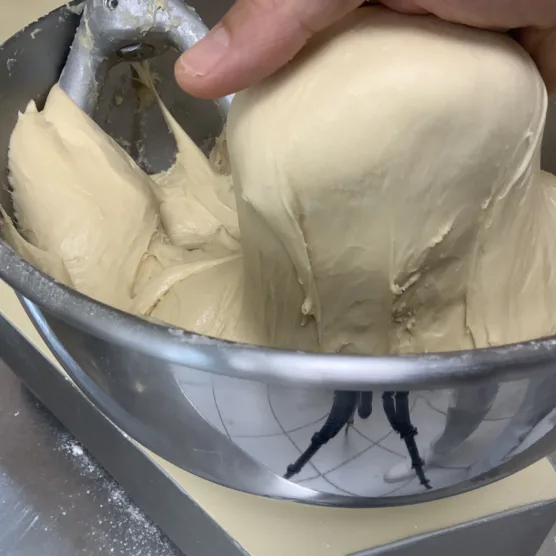
Mixing: How does oxidation affect the taste of bread?
The aromas of bread
The taste of bread is a complex concept because there are more than 540 aromatic molecules in bread products, their proportions and their perception by the consumer are extremely variable and not all of them are desirable, especially some produced during excessive mixing.

Oxidation of the dough
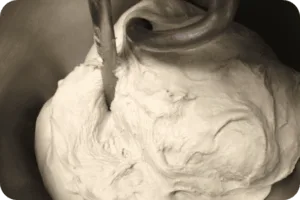
During the formation of the dough, after the initial mixing, air is incorporated into each movement of the tool, which allows the development of the gluten network and the constitution of the cells because 10 to 20% of the volume of the dough is composed of air. The repeated contact of the flour’s lipids with the air triggers oxidation reactions that will have several effects on the dough, some positive and some negative.
Effects on taste
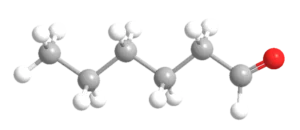
One of the products of this oxidation is a hydroperoxide which will give rise to volatile aromatic compounds, the best known of which is hexanal, whose smell is reminiscent of cardboard or freshly cut grass, which will mask the other aromas and give an impression of blandness to the product.

How can this be avoided?
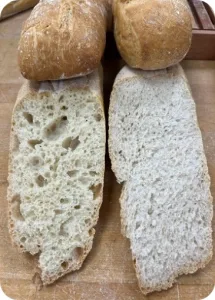
Various recipe and process parameters can reduce or mask this effect on the aromas of your products.
To find out more, take part in our Mastering the Taste of Bread training session!
Sources :
Eurogerm, H. Chiron et P. Roussel, M. Dewalque, R. Calvel